
Turning 65 Without Social Security Benefits? You May Need to Enroll in Medicare Yourself
Many people think Medicare automatically starts when they turn 65.
Sometimes it does. But not always
If you are turning 65 and you are not already receiving Social Security benefits or Railroad Retirement benefits, you may need to enroll in Medicare yourself.
That does not mean you do not have Social Security.
It simply means you are not yet receiving monthly Social Security retirement benefits.
And that one detail can make a big difference.
According to Medicare.gov, to sign up for Medicare Part A and/or Part B, you generally contact the Social Security Administration, not Medicare directly. Medicare.gov also states that depending on your situation, the easiest way to sign up may be online through Social Security.
This is where many people get caught.
They wait to claim Social Security benefits because they are still working, want a higher benefit later, or simply do not need the income yet.
That can be a smart retirement decision.
But here is the problem:
You may delay Social Security benefits and accidentally forget that Medicare has its own enrollment rules.
That mistake can lead to delayed coverage, late penalties, or confusion when you need care.
_______________________________________________________________________
3 Key Points
If you are not receiving Social Security benefits yet, Medicare may not enroll you automatically.
Your first Medicare enrollment window usually lasts 7 months.
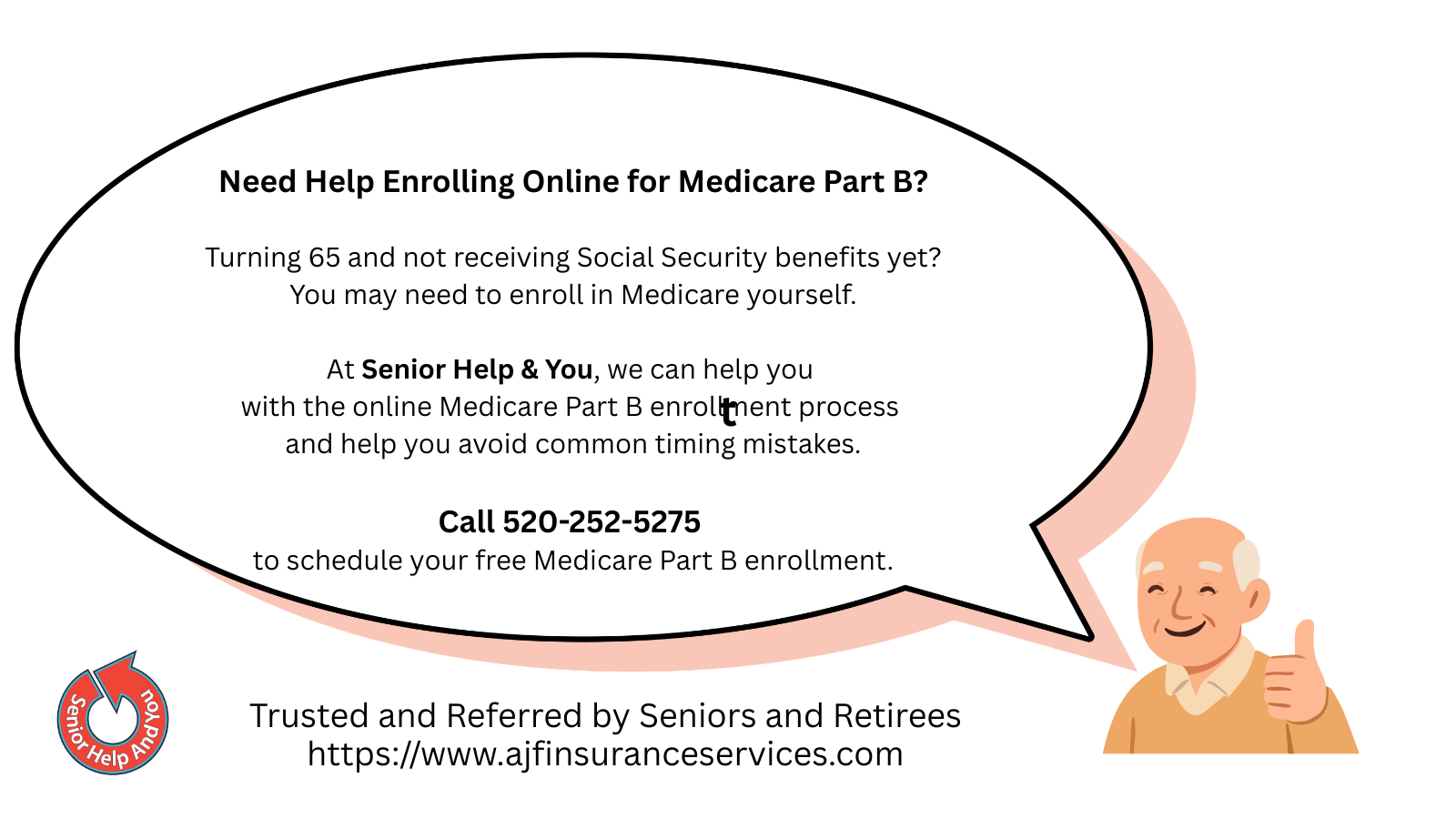
Senior Help And You can assist with online Medicare Part B enrollment if you need help.
_______________________________________________________________________
Why This Medicare Rule Confuses So Many People
Here is the simple truth:
Turning 65 does not always mean Medicare automatically starts.
For many people, Medicare enrollment depends on whether they are already receiving Social Security benefits before age 65.
But if you decided to wait before claiming Social Security, you may need to act.
That is very common today.
Many people wait to claim Social Security because they are still working, they want a higher monthly benefit later, or they simply do not need the income yet.
That can be a smart retirement move.
But it creates one Medicare danger:
You may delay Social Security benefits and accidentally forget Medicare.
That is the mistake.
_______________________________________________________________________
Medicare Part A and Part B: What Are You Signing Up For?
When people say, “sign up for Medicare,” they usually mean Original Medicare.
Original Medicare has two main parts:
Medicare Part A
Many people qualify for premium-free Part A based on work history.
Medicare Part B
Part B usually has a monthly premium.
This is why Part B timing matters so much.
If you enroll late and do not qualify for a Special Enrollment Period, you may have to pay a late enrollment penalty for as long as you have Part B.
Medicare.gov warns that if you miss your 7-month Initial Enrollment Period, you may have to wait to sign up and may pay a monthly late enrollment penalty for as long as you have Part B coverage.
That is not a small detail.
That is a long-term cost.
_______________________________________________________________________
Your First Medicare Window: The Initial Enrollment Period
Your first chance to sign up for Medicare is called your Initial Enrollment Period.
This window usually lasts 7 months:
3 months before the month you turn 65
The month you turn 65
3 months after the month you turn 65
Medicare.gov states that the Initial Enrollment Period generally starts 3 months before you turn 65 and ends 3 months after the month you turn 65.
This is the window many people should pay close attention to.
Why?
Because signing up early can help your coverage start on time.
Medicare.gov explains that if you sign up before the month you turn 65, Part B coverage can start the month you turn 65. If you sign up during your birthday month or during the 3 months after, coverage generally starts the next month.
In plain English:
Do not wait until the last minute.
Medicare has dates.
Doctors have bills.
You do not want the two to collide.
How to Sign Up for Medicare Part A and Part B
Medicare.gov says that if you want to sign up for both Part A and Part B, or only Part A when you turn 65, you can apply online through Social Security. Medicare.gov describes this as the easiest and fastest way to sign up and find out if you qualify for
Social Security also states that people age 65 or older can enroll online for Part A and Part B, or Part A only. SSA also notes that you can delay Part B if you are already covered through an employer group health plan.
Here is the simple process:
Step 1: Decide if you need Part A only or Part A and Part B
Some people sign up for both.
Some people sign up for Part A only because they are still working and have employer group health coverage.
This should be reviewed carefully.
Step 2: Apply through Social Security
You can apply online through Social Security, call Social Security, or contact your local Social Security office or call Senior Help And You at 520-252-5275.
SSA lists the information you may need, including your Social Security number, where you were born, and details about current or past group health plans after age 65.
Step 3: Watch for your Medicare card
After you sign up, Medicare.gov says you will receive a welcome package with your Medicare card and Medicare Number. You need that Medicare Number to create a secure Medicare account, join a plan, or buy supplemental insurance.
That Medicare Number matters.
Without it, you may not be able to move forward with a Medicare Advantage plan, Part D drug plan, or Medicare Supplement plan.
_______________________________________________________________________
What If You Are Still Working at 65?
This is where Medicare gets tricky.
But do not assume.
Medicare.gov says a Special Enrollment Period may be available if you have or had health insurance through your job, your spouse’s job, or, in some disability situations, a family member’s job. That Special Enrollment Period generally ends 8 months after the group health plan coverage or employment ends, whichever happens first.
Here is the danger:
Not all coverage protects you from a Medicare penalty.
For example, Medicare.gov says COBRA is not considered group health plan coverage and getting COBRA does not change when the Special Enrollment Period ends.
That means someone can think:
“I have COBRA, so I am safe.”
But Medicare may see it differently.
That is why before delaying Part B, you should confirm your exact situation.
Ask:
Am I still actively working?
Is this employer group health coverage?
Is the employer coverage based on current employment?
Is it COBRA?
Is it retiree coverage?
Is it Marketplace coverage?
Will delaying Part B create a penalty?
Those questions matter.
Medicare Enrollment Is Only the First Step
Once you enroll in Medicare Part A and Part B, the next question is what kind of coverage fits your needs.
Some people choose Original Medicare with a Medicare Supplement and a standalone drug plan.
Others look at Medicare Advantage.
Before making that decision, it helps to understand the difference between Medicare Advantage and Medicare Supplement coverage.
You may also want to read our guide on why Medicare does not cover everything, especially if you are worried about deductibles, copays, coinsurance, or medical bills during recovery.
And before choosing coverage, it may help to review the 2026 Medicare cost changes so you understand what may affect your monthly budget.
This is why Medicare planning should not stop at enrollment.
Getting Part A and Part B is the first step.
Choosing the right path after that is the next step.
_______________________________________________________________________
What If You Missed Your Medicare Enrollment Window?
If you missed your first chance to enroll and you do not qualify for a Special Enrollment Period, you may have to use the General Enrollment Period.
The General Enrollment Period runs from January 1 through March 31 each year.
Medicare.gov says if you enroll during the General Enrollment Period, coverage starts the month after you sign up, and you might pay a monthly late enrollment penalty if you do not qualify for a Special Enrollment Period.
That is the part many people do not expect.
They think they can sign up whenever they want.
But Medicare does not always work that way.
Medicare has windows.
If the window closes, the next one may not open when you need it.
_______________________________________________________________________
What If You Already Have Part A and Need Part B?
Some people sign up for Part A at 65 but delay Part B because they are still working.
Later, when they retire or lose employer coverage, they need to add Part B.
Medicare.gov says that if you already have Part A and want to add Part B because you are losing job-based coverage, you can apply online for Part B and have the employer fill out Form CMS-L564. The completed form can be sent to the local Social Security o
This form helps show that you had employer group health coverage.
That proof matters.
Without the right documentation, your Part B enrollment can become more difficult.
_______________________________________________________________________
What You Should Do Before You Turn 65
Here is a simple checklist.
1. Confirm whether you are receiving Social Security benefits
If yes, you may be automatically enrolled.
If no, you may need to enroll yourself.
2. Mark your 7-month Medicare window
Do not wait until your birthday month if you can avoid it.
3. Review your current health coverage
Especially if you are still working.
4. Decide whether you need Part A only or Part A and Part B
This depends on your employment, coverage, and personal situation.
5. Check your next step after Original Medicare
After you have Medicare Part A and Part B, you may still need to decide between:
Original Medicare with a Medicare Supplement and drug plan
A standalone Part D prescription drug plan
Medicare.gov states that to join a Medicare Advantage Plan, you need both Part A and Part B. To join a Medicare drug plan, you need Part A or Part B.
This is why the order matters.
First, get Medicare timing right.
Then review your coverage options.
_______________________________________________________________________
Related Medicare Articles
Before choosing coverage, it helps to understand what Medicare does, what it does not cover, and what costs may change.
You may also want to read:
These articles can help you see why Medicare enrollment is only part of the bigger retirement health care picture.
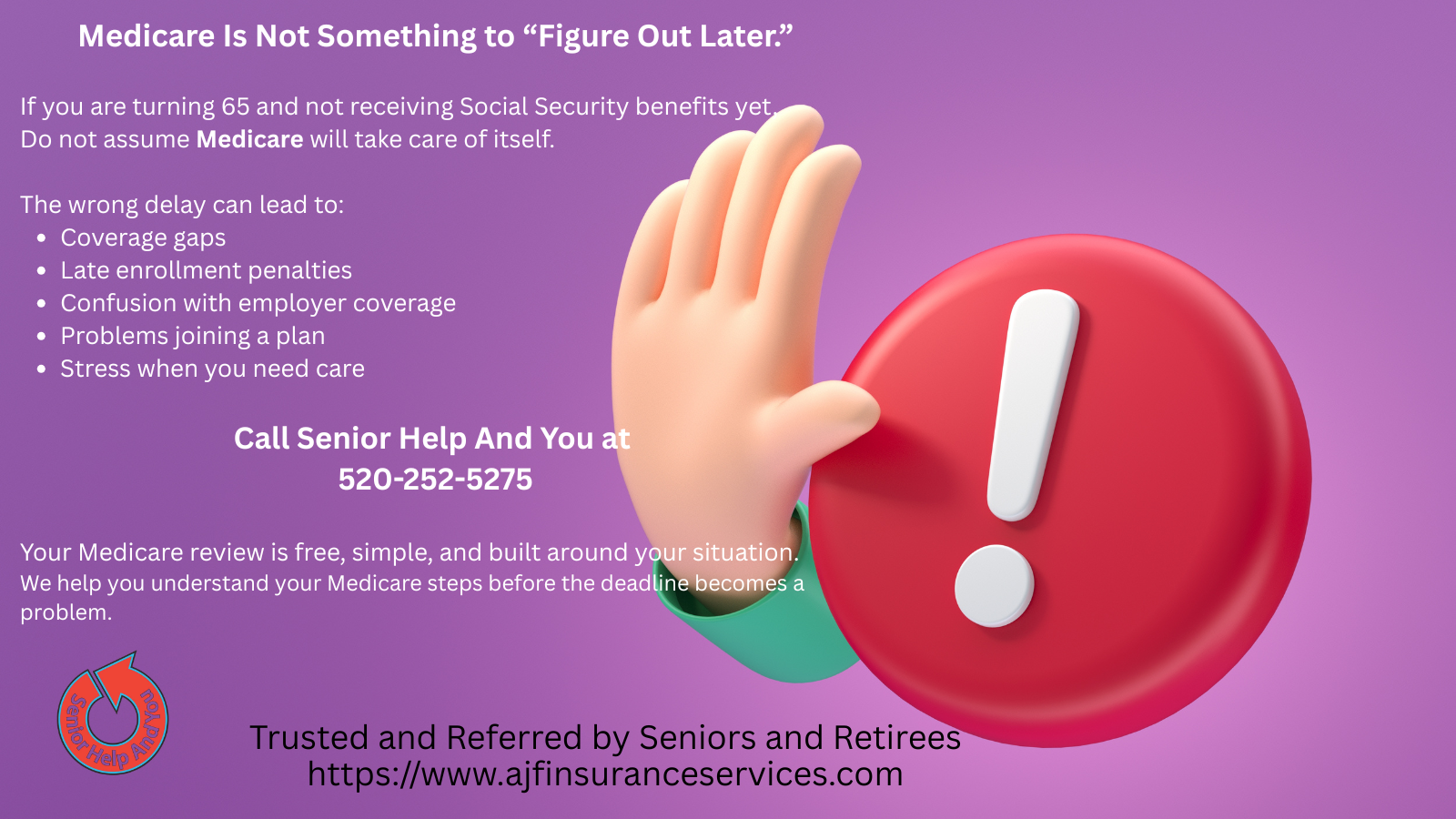
Do Not Let Medicare Part B Enrollment Become a Guessing Game
Medicare deadlines matter.
If you miss the right window, you may face a delay, a penalty, or a coverage gap.
If you need help enrolling online for Medicare Part B, call Senior Help & You at 520-252-5275.
We can walk you through the online enrollment steps and help you understand what applies to your situation.
Your review is free, simple, and personal.
Call 520-252-5275 today.
Senior Help And You
Trusted and Referred by Seniors and Retirees
_______________________________________________________________________
Conclusion
Turning 65 is a major milestone.
But Medicare enrollment is not always automatic.
If you are turning 65 and not receiving Social Security benefits yet, you may need to enroll in Medicare Part A and Part B yourself.
That does not mean anything is wrong.
It simply means you need to know your dates, understand your current coverage, and take the right step at the right time.
At Senior Help & You, we help seniors and retirees understand Medicare in plain English.
No pressure.
No confusion.
Just clear guidance.
For questions or help with online Medicare Part B enrollment, call 520-252-5275.
_______________________________________________________________________
3 Takeaways
If you are not receiving Social Security benefits yet, Medicare may not automatically enroll you.
Your Initial Enrollment Period usually lasts 7 months around your 65th birthday.
Senior Help & You can assist with online Medicare Part B enrollment and help you avoid common timing mistakes.
References / Sources
Medicare.gov — Ready to sign up for Part A and Part B.
Medicare.gov — When Medicare coverage starts.
Social Security Administration — Sign up for Medicare.
Senior Help & You — Medicare education and enrollment guidance for seniors and retirees.
Disclaimer: This article is for educational purposes only. Senior Help And You is not connected with or endorsed by the U.S. government or the federal Medicare program. We provide Medicare education and enrollment assistance. Medicare rules can vary based on your work status, employer coverage, current insurance, and enrollment timing.
Authored by Albert Ferrin, RSSA®
Founder, Senior Help And You LLC
